
An insightful study by Birello, Llompart-Esbert, & Moore (2021) shows that young people training to be primary or secondary teachers generally have positive attitudes towards multilingualism, living in the 21st century and knowing multiple languages to varying degrees. But when they start thinking about TEACHING, or picturing themselves in front of a linguistically diverse class,Continue reading “What do pre-service teachers need to know to teach linguistically diverse classes? Is it theoretical or practical?”
Category Archives: Literature summaries
Investigating quantity and quality of vocabulary input in language immersion programs
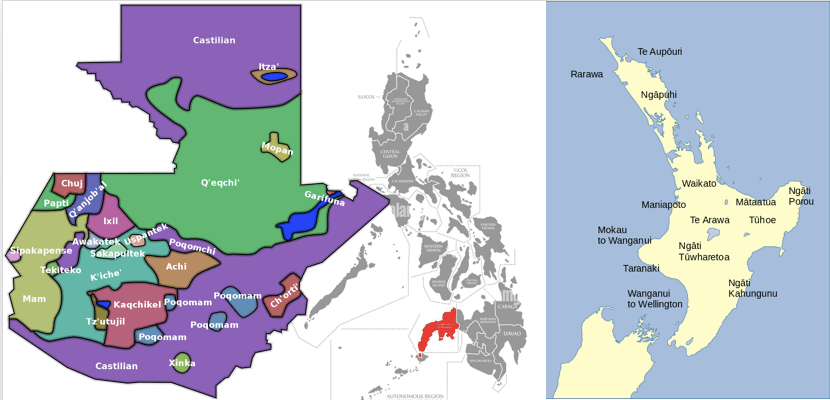
In language revitalization efforts, school-based “immersion programs” are considered the best type of program. However, what needs to be monitored is not just how people avoid use of other languages in the classroom (i.e., avoid translanguaging)…………. but the quantity and quality of input in the target language. This issue was recently investigated by two veteranContinue reading “Investigating quantity and quality of vocabulary input in language immersion programs”
How do multilingual “local” students differ from multilingual “immigrant” students on school-based language assessments?

Although a few countries in the world are English-dominant, most others are multilingual. There’s truth to the claim that multilingualism is the global norm. So, if it is the global norm, in what ways can school-based language assessments (even if multilingual) value “local” students’ multilingual language profiles over those of “non-local” or “immigrant” students? ToContinue reading “How do multilingual “local” students differ from multilingual “immigrant” students on school-based language assessments?”
What are the challenges to maintaining national linguistic diversity? — Globally relevant lessons from heritage language education in the U.S.

If a country wants to maintain its linguistic diversity, it has to respond to the challenges of teaching heritage languages. “Heritage languages” (HLs) and “heritage language learners” are not well defined terms, but they can be understood as the languages of indigenous peoples, immigrants, and other linguistically minoritized groups. The day before posting this, IContinue reading “What are the challenges to maintaining national linguistic diversity? — Globally relevant lessons from heritage language education in the U.S.”
Why are younger immigrant children so much “better” at learning the new country’s language?

Or, to take the other side of the coin: “Why are OLDER immigrant children so much better at heritage language maintenance?” These two questions were tackled in a 3-year longitudinal study of 10 Chinese children/teenagers who immigrated to New York and New Jersey in the mid-1990s. Gisela Jia (City University of New York) and DorisContinue reading “Why are younger immigrant children so much “better” at learning the new country’s language?”
“Majoritized” and “Minoritized” Translanguaging: What they are and why they matter

This 2021 study by Ingrid Beiler examined three secondary classes in Norway taught by the same teacher: (1) a regular gr. 11 English class, (2) an accelerated class for gr. 10 students undertaking the gr. 11 English curriculum, and (3) a sheltered class for gr. 11 English repeaters (aged gr. 12/13), many of whom spokeContinue reading ““Majoritized” and “Minoritized” Translanguaging: What they are and why they matter”
What is “postmethod” language teaching and why has it been so influential?
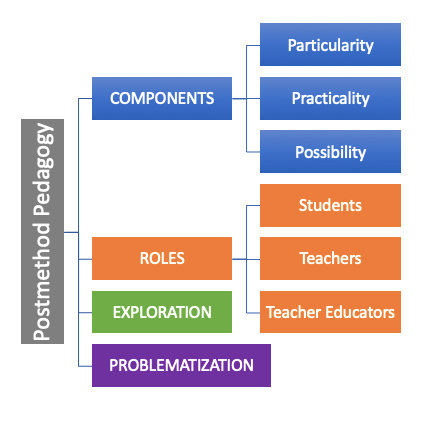
Even if you haven’t heard of B. Kumaravadivelu’s work on “postmethod” pedagogy, you probably have experienced its effects: the last trendy methods of language pedagogy—Communicative Language Teaching (CLT), Task-Based Language Teaching (TBLT), and Content Language Integrated Learning (CLIL)—are at least 20 years old. At some point, around the year 2000, the carousel of “trendy” languageContinue reading “What is “postmethod” language teaching and why has it been so influential?”
Is translanguaging compatible with indigenous language revitalization?

Translanguaging, code-switching/mixing/meshing, etc., versus a “target language only” zone: which is preferable for indigenous language revitalization? I think the answer depends on societal factors, which I illustrate in this post by contrasting two successful but very different cases of indigenous language teaching. The extent and nature of translanguaging (and other kinds of language-mixing) should beContinue reading “Is translanguaging compatible with indigenous language revitalization?”
The difference between language development and literacy development: What every teacher should know

In 1978, Jim Cummins, a rising education scholar, pointed out that first language (L1) development helps rather than hinders second language development (L2), because there is a common knowledge base as well as metacognitive skills that underlie both languages, which he called the Common Underlying Proficiency. This was a blow to the idea that studentsContinue reading “The difference between language development and literacy development: What every teacher should know”
Content Language Integrated Learning (CLIL): Seriously, a good idea?

As I prepare for Fall 2021, I am excited to step into a new role as coordinator of the MEd in Content Language Integrated Learning (CLIL) program at the University of Hong Kong. And yet, this week in late August, I summarize an important literature review about CLIL by Anthony Bruton titled: “CLIL: Some ofContinue reading “Content Language Integrated Learning (CLIL): Seriously, a good idea?”
 annamend